
We thought we had adulted properly
June 4, 2019
Transcript
Share
Copy URL
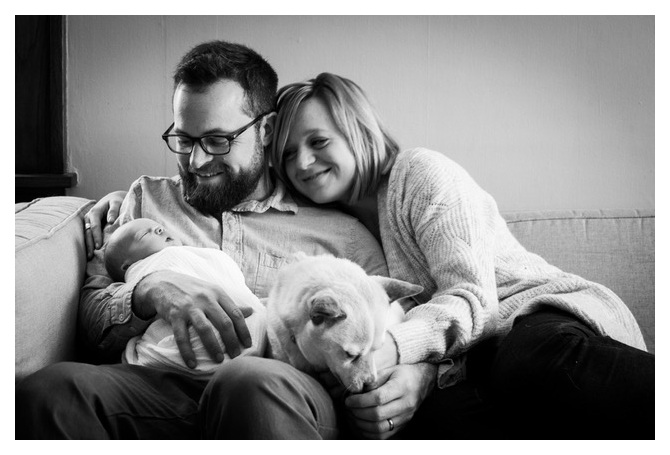
Caitlin and Corey Gaffer got a surprise letter from their insurance company saying they were being dumped for non-payment. Except, as far as they knew, they were paid up.
As it turned out, they’d made a couple of small mistakes, which they were eager to fix. But their insurer was definitely not interested. Caitlin and Corey spent fruitless weeks on the phone.
And then, Caitlin’s pregnancy, more than six months along, ran into complications.
They scrambled for months to get covered, while racking up about $30,000 in hospital bills.
There’s a happy ending. Two, in fact.
First, their baby was born healthy (and insured) in January. She’s in the episode too, and she’s adorable.
Second: In March their old insurer offered an apology, and offered to reinstate them. (This was the day after a reporter called to ask the insurer for their side of the story.)
But the whole journey was harrowing, and opens up questions about what kinds of safeguards consumers have, or should have, against getting dropped.
Welcome to Season Two!
This story, like a lot of this season, came straight from my inbox. A few days after the show launched, I got an email with the subject line “Pregnant woman and her husband in Minnesota need help.”
We’ve got new friends!
We’ve got co-producers for Season Two, Kaiser Health News. Three things to know:
First: Kaiser Health News is not affiliated with the giant health care provider Kaiser Permanente. They share an ancestor, which is a fun story I’ve written all about here.
Second: They ARE a great non-profit newsroom covering health care in America, an editorially independent project of the Kaiser Family Foundation. (There’s that name again. And again, here’s the story.)
Third: Their editor-in-chief is one of the people who inspired this show.
YEP. The whole story is worth reading. I am so pleased and proud to be working with these folks.
Catch you next time. Till then, how about
- Following us on Twitter or Facebook?
- Supporting the show with a donation?
- Sharing a story?
Please note that this transcript may include errors.
Dan: Hey there. This is an arm and a leg, a show about the cost of healthcare. I’m Dan Weissman. Welcome to season two. I have been learning so much. I’m really excited to share these stories with you.
For example, as soon as this show launched last fall. I started getting emails from listeners. One of them had the subject line, pregnant woman and her husband in Minnesota need help. This story illustrates one of the big, big themes we’re exploring on this show. You gotta have your guard up the whole time, be ready for anything to happen.
At minimum. You gotta be ready to do some pretty advanced adulting. And even then, holy crap, you guys, I mean the couple in this story, Caitlyn and Corey, they had already done some pretty good adult
more than two years ago. Caitlyn was looking at leaving her job to go back to school. And Corey was self-employed and they were thinking they’d like to have a baby and they were asking the tough questions.
Caitlyn: So yeah, we kind of had to like really walk through it and talk about what the insurance looks like with having a baby and should I just hang on to this job so we can have insurance?
Like that was a conversation we had. And we stood in that room downstairs for like days and FIG tried to figure out insurance
Dan: And they had to get really specific, what hospital do we think we’d like to have this baby at? What insurance plans cover that one? On the state Obamacare exchange, they found a plan from a company called HealthPartners that runs a bunch of local hospitals, including the hospital they wanted.
So the hospital and the insurance are the same company. Convenient, right? And so they chose that and they exhaled, they had adult.
It took him a while to get pregnant. When Caitlyn finally got a positive result, she ran to the drugstore and bought six more pregnancy tests.
Caitlyn: Cory’s like, I don’t know. I don’t know. I was like, I don’t know, either I, it says it’s working.
Corey: And I think we had all six of ’em until a couple months ago. They were hidden in, which is like, this is such a good moment.
Dan: That was last spring and the pregnancy rocks along. Caitlyn’s healthy baby seems to be doing great, everything great. And then last fall, just about six months in. Letter arrives from HealthPartners. Corey’s out on a shoot. Caitlyn opens, it says, we didn’t get your payment, so we’re dropping you. Actually, we dropped you as of about a month ago.
Bye.
Caitlyn: And I remember I looked at it and my stomach dropped and I was like, oh shit. What does this mean? I don’t get it. Yeah, I paid this. Yeah. And then I was like, and we’re pregnant. Like.
Dan: Yeah, Caitlyn calls health partners, waits on hold, gets transferred, transferred, transferred, and gets somebody who’s like, oh wait.
Oh, you bought this through the Obamacare exchange in Minnesota. That’s called Minsu, like Min for Minnesota. Sure, for insurance. Minsu, you bought this through minsu. You gotta call Minsu. They’re the ones that dropped you.
Caitlyn: Oh, okay. Sure. Call Minsu. Transfer. Transfer, transfer.
Dan: Finally, somebody at Minsu says, what?
No, no, no, no. You gotta call health partners. And she does. It gets exactly the same result.
Caitlyn: And I mean, it was back and forth, back and forth,
Corey: and if you’ve ever called the health system, it’s like, ugh. You know, it takes a half an hour, 40 minutes of waiting to get a hold of anybody. So it was really frustrating or got frustrating quick of like, we just were on the phone with them and they’re not gonna wait another half an hour.
They told us we had to come over here.
Dan: Nobody will really talk with them, and at first they have no idea why this is happening at all. As far as they know they’re paid up. And then a letter arrives from their hospital, clues ’em in the previous month. They send a payment to the wrong address. Instead of sending it to HealthPartners Insurance, they sent it to that Health Partner’s hospital.
The letter from the hospital says, yeah, we couldn’t figure out what this check was for, so we returned the payment to the account. You sent it from. So Corey and Caitlin had made a mistake, actually two at the moment when they sent their next payment to the right place. This time, their account didn’t have enough money to cover the whole thing.
A week later it did, but yeah, two strikes. They’re out.
Corey: We thought we did the right steps. Yeah, we thought we adult properly and right.
Caitlyn: Yeah. We adult way wrong.
Dan: They’re like, okay, back to the phones. Now. They knew something. They’ve made an honest mistake. Time to fix it. And still the same result. Nobody will let them get to the part about the mistake they made, how to fix it. They just say, oh, call the other guys. Zero progress every day. For like a
Corey: week. I remember like talking to people and being like, Hey, like this is an honest mistake.
Like here is the proof. Make a human, you know, reaction to this.
Dan: When I met them this spring, Corey and Caitlyn had marked up a calendar to reconstruct the timeline. They got noticed they were canceled. The next two weeks are phone calls and the two weeks after that are marked, gave up. Or you could say they changed strategies.
The pregnancy had been totally normal so far. They’re healthy. It’s November. Baby’s not due till late January. They will have new insurance then maybe they can ride it out, pay cash for everything for the next couple of months.
Corey: So we were like, cross our fingers. Hope the worst doesn’t happen until, you know.January 1st, of course,
Dan: this strategy requires a new kind of adulting,
Corey: and we did the calculations of like, okay, how much will it be for, you know, prenatal care or we just called
Caitlyn: every time and it was, and got a price for every single thing.
Dan: She goes in for a glucose test, but she calls to get the price first, has an ultrasound, gets the price first,
Caitlyn: and everything was great.
Dan: They’re like, you’re fine. You’re like, and I was like, good.
Caitlyn: Cool. One more
Dan: trimester to go. We’re gonna be, we’re good. We got this. And then
Caitlyn: I was in class, um, and I was getting up to leave and it had felt like, which I know don’t know what this feels like. At the time, it felt like my water had broke. And I was like, okay.
So remember I got in the car, called my sister first. Sorry, Cory. She’s just like my go-to person. I was like, this feels like this. She’s like, why don’t you call the nurse sign? I was like, okay. I got home. You know, obviously checked and there was blood He called 9 1 1 and my first thing was we don’t have health insurance.Yeah. Don’t do anything.
Dan: Caitlin actually tells Cory, tell the ambulance not to come. You’re gonna drive me to the hospital. So he does.
Corey: As we’re walking out out of the house, the firetruck and ambulance are pulling up to the front of our house. They’re like passing us, like walking out. We’re doing one of, you know, covering our faces, trying, it wasn’t us that called kind of thing.
Dan: The people at the hospital are like, yeah, we’ll keep you here for the night. And every time a doc walks into the room, Corey and Kaitlin say, we don’t have health insurance. Don’t do anything you don’t totally have to do. And Corey starts sending emails to everyone they can think of, including me. Thanks guys.
And writing their US senators seems to actually help because a couple days later, they’re back from the hospital and they hear from a guy from the state, from Minsu, his name is Cher, and he says, I can fix this. I’m gonna fix this. I’ll get your insurance to take you back. It’ll be like, all this never happened.
Corey: Yeah. We’re like, yes. It’s amazing. Like I told Cher that day, I was like. I’m gonna name my child after you. Like I was, we were so excited because it was like, oh my gosh, this okay. It works. Like we’re, we were ecstatic.
Dan: You know, of course it doesn’t happen right away. And then a week later, more blood.
Caitlyn: Um, Corey was upstairs working and I was getting ready for bed and it happened again.
And we were like, oh shit. And we knew this time, just go straight to the hospital.
Corey: Um, we didn’t call the ambulance this serious. We didn’t call
Caitlyn: the ambulance. Uh, so we just drove straight to the hospital and they admitted us. And then, um, it got pretty serious.
Dan: The docs told them, if this keeps going, the baby might have to come out right away.
And this hospital isn’t equipped for that scenario. A couple days later, they’re still in that hospital.
Corey: And there’s more blood, you know? So it’s like, oh, now we’re taking an ambulance ride to a different hospital.
Caitlyn: Yeah. What is this? That’s what I kept thinking what is, because everybody talks about ambulance, they, you know, there’s horror stories.
Yeah. And in the midst of this, I remember laying there, I’m like, what is this costing us
Dan: that is in just a minute on an arm and a leg right after this break?
Dan: The season of an Arm and a leg is a co-production of Public Road Productions and Kaiser Health News.
That’s a nonprofit newsroom covering healthcare in America. It’s an editorially independent part of the Kaiser Family Foundation. It is not affiliated with the giant healthcare provider, Kaiser Permanente. They share an ancestor. It is a fun story that will recap at the end of this episode. Okay, back to the story.
Caitlin and Corey spend Thanksgiving in that second hospital. Family comes to them, they don’t have to cook. That’s nice. And after five nights at two different hospitals plus that ambulance ride, they get to go home. Then a week later, Cher the guy from the state who’s gonna fix everything. He has bad news.
They’re old insurance. Is not gonna take them back. All
Corey: of this makes me reliving this hurts. Yeah. It’s like, yeah. So we had just gone out to a great breakfast and got on the phone with Cher and he was like,
Speaker 9: womp.
Corey: They’re not gonna do anything. They can’t do anything. Same story as before,
Dan: but there’s a consolation prize.
Cher has this other pitch. Pick one of the other plans on the exchange. We’ll get you into that one. You know, retroactively, it’ll be like you’ve had insurance the whole time, just. Not the one you signed up for before. Suddenly they’re back where they started two years before. Staring at insurance plans for two straight days, and then Corey and Kaitlyn hit the phones again, getting estimates, double checking with providers they’ve already seen.
Do you really take this insurance? What do you think our bill’s gonna be? They show me the pages from their notebooks where they wrote down all the estimates and the names of the people they talked to and what time documenting everything. And still they cannot get super solid answers. And even with the best information they can get, none of their choices look great.
’cause they’ve been to two hospitals now. Their role plan covered both, but none of these plans covers more than one of the places they’ve already been. And that means. No matter what, they’re out a bunch of money, like at least 10,000 bucks. This Constellation Prize is not as good as their old insurance.
So choosing a new plan is partly about minimizing the losses they’ve already suffered, but they’ve also gotta think about minimizing risks they’re still facing going forward. For instance, what if there’s another bleed? Another hospitalization,
Corey: and the doctors were saying to us like, if there is another bleed, that most likely means the baby’s
Dan: coming out.
If they don’t get to 30 weeks, that baby’s premature and they have to go to the specialty hospital covered by one plan. If they do get to 30 weeks, they can go to their regular hospital, see their regular doctor. Covered by a different plan. And at this point they’re at almost 29 weeks. They call Cher.
They tell ’em they want the one that covers their regular doctor and they cross their fingers that the baby will wait another week.
Corey: Okay, get to 30 weeks. Get to 30 weeks, like don’t have anything to get to 30 weeks.
Dan: And they do, but the baby could still come any old time. Early any day, and they still don’t actually have this new health insurance.
They really wanna get that nailed down, like get somebody a check by the end of December at the very latest. But no one’s given them any details about how to do that. So it’s time for another marathon round of calls this time to their new insurance company. Are we showing up in your system? Have you heard from our pal share?
Can we pay you? How much? Where do we send the check? They call twice a day. That’s all they can do that. And bedrest for Caitlyn Christmas is kind of stressful.
Corey: We’re worried about Caitlyn bleeding. We were like, still didn’t know if we had insurance.
Caitlyn: So we made our family come here to celebrate, try, try not
Corey: to go into labor.
Big
Caitlyn: plan. Yeah. Honestly, that was like Christmas. The game was don’t go into labor. Don’t go
Dan: into labor. A few days after Christmas, Corey’s with a client. He calls the insurance right at the start of his lunch break so he can eat while he’s on hold and still have time to actually talk once somebody picks up and he lucks out.
He reaches a woman he’s talked to before
Corey: who knows their story and was like, okay, I’m gonna calculate the amount. We’re gonna just do the math right now. Like from what on my end, what it looks like, what this plan costs. Send me this, send in the check and we will, you know, cross her fingers. Hopefully it works.
Oh my God. Yeah.
Dan: She was like not promising you
Corey: anything. No, she wasn’t promising anything. Anything.
Caitlyn: I remember like I dropped it in and I text you, like, pray this works. Yeah.
Speaker 9: That was good. Oh yeah. Strange. Thank you.
Corey: Alright.
Oh, oh. There you go. There. Nice, nice. Safe.
Speaker 9: Yeah. What’s up, bud?
Yeah, you’re all right. Yeah, you’re on a podcast.
Oh, girl, you’re totally worth it.
Dan: Okay, so yeah, Caitlyn and Cory’s baby is adorable and healthy. She was born on January 23rd, and yes, sending that check did work. Eventually, of course, they still had to call twice a day to make sure. Did the money arrive? Did the insurance company know what it was for? And for a while the answer is no.
Corey: The weekends kind of sucked that time.
’cause we couldn’t call on the weekends because they were close, which is like so like, so depressing. It’s like I can’t call ’em for two days. What do you mean
Dan: finally, three weeks into the new year, they get confirmation that policy for the previous year. Is a go. Good thing too. Next day Caitlyn goes in for an ultrasound
Caitlyn: and they’re super casually like, yeah, we’ll get this baby out of here.
Baby’s ready, let’s go. So I called Corey. I was like, okay, you should get here. We’re having a baby.
Corey: Yeah. We didn’t have the bag packed or anything. No. Classic first parents. Yeah. Run around the house, grab whatever I can. Oh my gosh. What’s happening? Yeah.
Dan: I meet them all, three of them. Two months later, we talk for more than six hours.
Reconstructing the whole timeline, piecing together what happened by the end of the day. I tell ’em, I feel like I’ve watched you get tireder. Yeah.
Caitlyn: As
Dan: we’ve been having
Caitlyn: this conversation. Yeah. It’s, it’s a lot to go back, I’m like, oh my gosh, that happened. And it’s like. Like, I think I put those outta my brain.
Yeah. And now I’m in baby world, but that was so stressful.
Speaker 9: Mm-hmm.
Caitlyn: I mean, it’s still stressful, but in the thick of it. That was so scary. The bummer part. I mean, there’s a big, lots of bummers, but like it’s not done yet. Mm-hmm. We still gotta, after this podcast, we have to actually still. Figure this out.
What
Dan: that is. There are still bills to sort out. They’re still waiting for final word from their new insurance company about exactly what they owe to who for those hospitalizations in 2018. And there are still unanswered questions like, was it legal for health partners to just drop them without giving any warning?
Can they do that when Caitlin was pregnant?
Caitlyn: I don’t know if we’ll ever know the answer. Yeah.
Dan: Uh, I’ll ask around.
Caitlyn: Yeah.
Dan: And I did. After more than six weeks of bugging various legal experts and three different state agencies in Minnesota, I got an answer buried deep in state regulations. There is a provision that basically says, yeah.
On a policy like the one Caitlyn and Corey had, the insurer can cut you off without notice if you don’t pay on time. And then there’s a bigger picture question that all of us can relate to. No matter who they were calling health partners, Minsu or the insurance company, they ended up with every single time they had to sit on hold for maybe a half hour and then end up talking with somebody who didn’t have the authority or the competence to do anything substantive to advance the conversation.
Caitlyn: There’s this like. You know, imaginary wallet. We can’t break through to be like, Hey, look at this. This is easy, let’s resolve this. It takes months of phone calls and waiting, going forward, going backwards, going forward, going backwards.
Corey: How much time we spent much, how much money the these companies spent talking to us.
You know,
Dan: I tell Corey and Caitlin my theory. Now that I’ve been hearing a lot of stories like this, and I’m not the first person to say this, but it’s like those systems, especially all the long hold times, all those people who don’t really do anything, maybe they’re just inefficient, but maybe they’re really, really efficient.
Maybe they’re like a toll. The health insurance companies and everybody else are charging you like you wanna talk to somebody who can maybe help you. Let’s see if you’re willing to pay this toll. Otherwise, maybe you just pay whatever we tell you to pay. Caitlyn and Corey, just kind of nod to that.
There’s a postscript here. When I get home from Minnesota, I reach the press rep from HealthPartners, the company that booted Corey and Caitlyn last fallen, wouldn’t take ’em back. I tell her the story how I want their response. She says she’ll get back to me the next day, except the next day. Guess who gets a call from HealthPartners?
Corey and Caitlin, they hear from some executive,
Listener: she just said like, I heard you’re doing a podcast. I wanna know how I can help you. At this point, I’m like, well, you can give me a year of free therapy.
Dan: They don’t get that, but HealthPartners does offer to reinstate them, and later that day, HealthPartners writes me to say, yeah, we got nothing to say. Next time on an arm and a leg, we start a series about how prices got to be so high. It’s kind of a horror story. For instance, it starts in a wood shop at a table saw.
Speaker 2: Looked away from the blade for a minute as I reached my hand in to grab the off cut and put my hand in the still spinning blade. Oh, and the woodworker.
Dan: He doesn’t have health insurance. His story has kind of a happy ending, financially speaking, but the question is, why is this so scary? I mean, financially scary.
I mean, me even knowing the ending, I’m not going near a table saw anytime soon. That’s next time on an arm and a leg till then. Take care of yourself. This is an arm and a leg, a show about the cost of healthcare. This episode was produced by me, Dan Weissman. Our editor is Whitney Henry Lester. Our consulting managing producer is Daisy Rosario.
Our music is by Dave Weiner and Blue Dot sessions. Adam Raimundo is our audio warlock. Our intern is Daniel Fernandez. This season of an Arm and a leg is a co-production with Kaiser Health News. Your story’s coming right up. They are helping pay some of the cost of producing this season, and you are putting up the rest by supporting this show on Patreon.
Thanks to all of you. My family is not reaching directly into our pockets to pay these costs. That is a huge deal. Eventually, the show needs to be a sustainable enterprise, meaning. Our family will need some income from it, and that is why we are aiming to get a thousand supporters this year. I put that call out at the end of season one and a whole bunch of people responded.
At the end of our next episode, I will be thanking everyone who’s pledged two bucks a month or more, and that will be fun. It’s a long list. Meanwhile, here’s the deal with Kaiser Health News. The only thing it shares with Kaiser Permanente, the healthcare provider is a common ancestor, a guy named Henry j Kaiser.
He was what you might call an industrialist. He built a lot of US cargo ships for World War ii, and he helped build the Hoover Dam. He got into smelting, aluminum, making steel, all kinds of stuff. He also started a healthcare program for his workers that became Kaiser Permanente. Along the way, Henry Kaiser started a family foundation, and when he died in the 1960s, he left the foundation half his money.
It gave away money like a regular foundation, until 1990 when a guy named Drew Altman became their CEO. At that point, the Kaiser Family Foundation, also known as KFF, turned itself into a different kind of organization. It stopped giving money away and instead hired a bunch of health policy experts and had them do their thing.
The idea was to become a place where reporters and policy makers could get solid non-ideological information about the US healthcare system. And then by 2009, the foundation noticed it wasn’t getting so many calls from reporters, newspapers were shrinking, and reporters were getting laid off. So Altman created Kaiser Health News, an editorially independent program within KFF.
That aims to fill that gap. It’s a newsroom putting out the kinds of stories that commercial newsrooms just haven’t been doing as much or as well as they used to. They hired a bunch of amazing reporters. You should see the staff list. The word award appears a. Dozens of times and had them start putting out stories to get those stories out there.
Kaiser Health News makes its reporting available for free under creative common licenses, and it partners with news organizations like NPR, the New York Times, CNN, Chicago Tribune, the Tampa Bay Times, really anywhere to put the stories out. That’s who they are and that is why I could not be pleased her that they are co-producing this season of an arm and a leg, providing some financial and editorial support.
Diane Weber is national editor for Broadcast at Kaiser Health News. She’s the editorial liaison to this show, and she’s one of the world’s nicest humans. And just as a bonus, here is the sound of Kaitlyn and Cory’s baby. Going to sleep. You’re welcome.
Reporting on why health care costs so freaking much, and what we can maybe do about it.
More about us →
Latest Episodes
More stories about why health care costs so freaking much, and what we can maybe do about it.
March 19, 2026
‘Not workable’: How two Americans picked a plan this year — or didn’t
February 26, 2026
The EpiPen and Food Allergies (from Drug Story)
February 5, 2026
NYT’s Ron Lieber: ‘These people are not going to win’
See More
Looking for something specific?
For topic-specific deep dives and recommended reading, start here or use the search bar below to explore our site.

More of our reporting
Starter Packs
Jumping off points: Our best episodes and our best answers to some big questions.
Explore our Starter Packs →
How to wipe out your medical bill with charity care
Our guide to an under-the-radar but essential resource for wiping out medical debt.
How do I shop for health insurance?
Picking a health insurance plan can be super confusing. Here's our best advice.
Help! I’m stuck with a gigantic medical bill.
Don't freak out. We've laid out tips to help you manage your medical bills.
The prescription drug playbook
The high cost of prescription meds in the US is a crisis: one in four adults say they’ve skipped taking a prescription in the past year because of cost.
Help! Insurance denied my claim.
Insurance denies lots of claims, and people give up. But the majority of people who appeal win. Here's the best of what we've published so far to help you.
See All Our Starter Packs
If you don't know where to start or are just getting to know us, we recommend you start here.
Explore All
First Aid Kit
Our newsletter about surviving the health care system, financially.
Explore our First Aid Kits →
March 19, 2026
New episode: How two Americans picked insurance — or didn’t
Their take? “Not workable.” “You just have to laugh.”
March 12, 2026
Why did insurance *really* deny your claim?
With this tool, you could find out — and fight back.
March 5, 2026
$31K deductibles on ACA plans?
The Trump administration is proposing them, and more.
February 26, 2026
The EpiPen and Food Allergies (from Drug Story)
How a lifesaving — and notoriously expensive — drug came to be.
February 20, 2026
Hey, help us do our jobs better
Take our quick survey, okay?
See the First Aid Kit Archive
Our most useful tools for surviving the health care system, financially.
Explore All