
First Aid Kit is a newsletter meant to help you fight a brutal enemy — the American health care system. Subscribe here.
How my roommate and I are tackling almost $14,500 in medical bills, Pt. 2
Reading your receipts.
March 12, 2025
Share
Reading time: 4 min, 30 seconds
Hey, Claire here.
The #1 rule for fighting medical bills: Never take the first bill as the last word.1
The people who prepare medical bills often make simple mistakes when they “ring us up,” so it’s definitely worth double checking your bills for errors.
And communication between medical providers and health insurance can get … convoluted. So the first bill is not always an accurate account of what you owe.
In part 1 of this saga, I brought you in on the story of my roommate Margot and her ongoing fight against some big hospital bills.
To recap, in June, Margot had a bad fall where she broke her arm and wrist. A few weeks later, the bills started rolling in.
After two trips to the ER, multiple surgeries and follow-up exams, and ongoing physical therapy, Margot was staring down bills totaling more than $14,500. She was overwhelmed, and we decided to investigate her bills together.
Step one was getting organized and compiling all the documents we needed on Google Drive so we could both have access to them.
Now we’re going to talk about step two — once you’ve compiled all those receipts, how to read them and figure out if you’ve been charged something you don’t owe.
Fact-checking your bills
We’ve covered this process before in First Aid Kit, but here’s a reminder of what to look for:
-
First, scan your bill for any obvious red flags.
Keep an eye out for duplicate charges or services you were billed for that never happened.
When I had Margot look through her bills, she noticed a few line items that didn’t look right:
-
What looked like a double charge for anesthesia.
-
A charge for a service she never got on a date she didn’t go into the clinic.
-
Three charges for the same X-ray.
-
A straightforward doctor’s appointment coded as very complex – a “level 4”2 — making the cost of her care more expensive.
In sum, this was about $1,190 in charges we were going to investigate.
-
Check the CPT Codes. Short for “Current Procedural Terminology,” these are unique numerical codes for specific medical services. They come in handy when the line items on your bills are something vague like “EMERGENCY ROOM,”3 or something you’ve never heard of.
For example, Margot and I wanted to understand what this “nerve block” she’d been charged for was — CPT code 64415.
We used a free tool shared with us by a First Aid Kit reader called “Find a Code.”4 This is what we found:
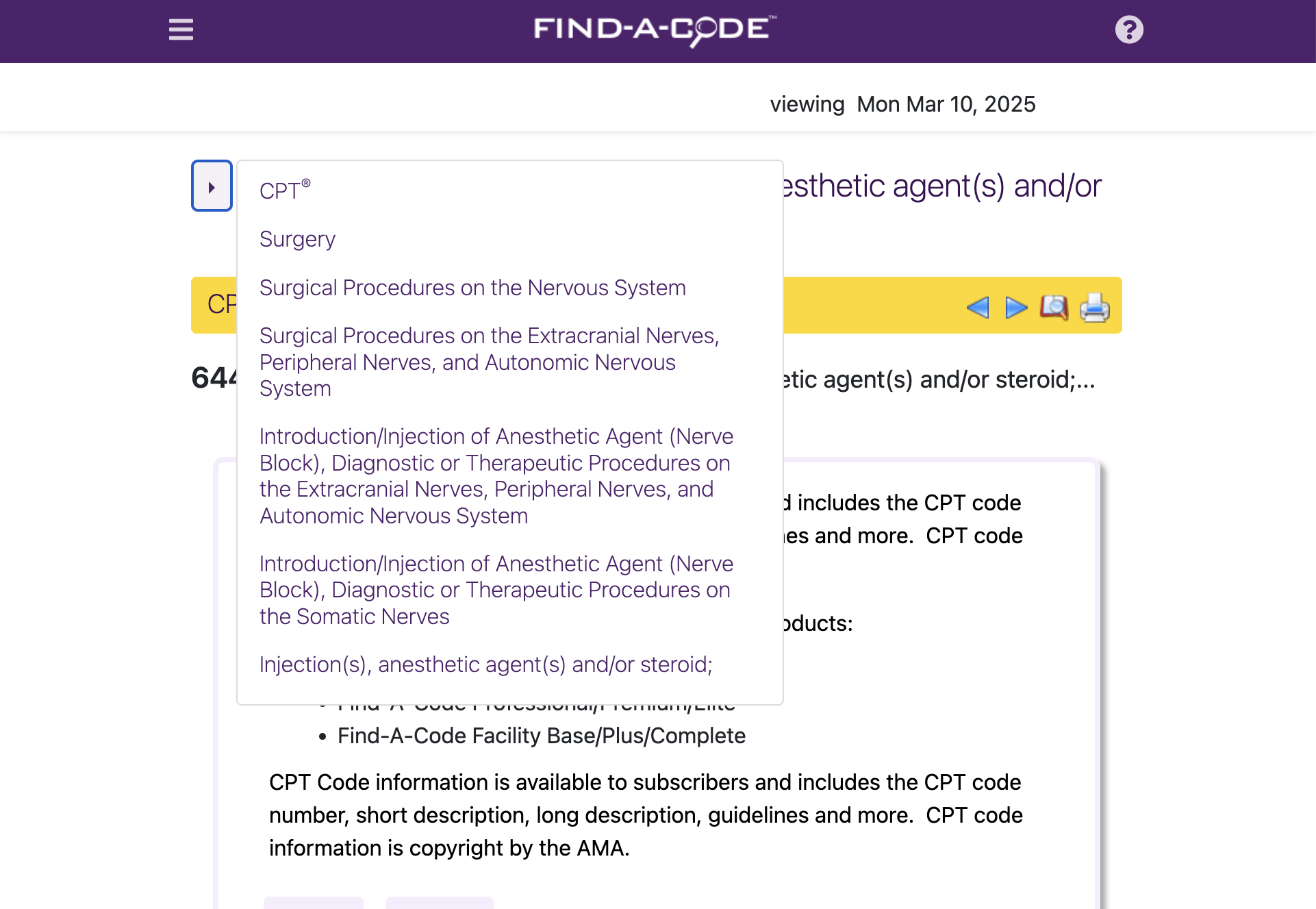
The top hit when we looked up CPT code 64415 on “Find a Code” was “surgical procedures on the nervous system.”
This made sense, since the surgery she had that day was for nerve damage caused by the broken bone in her arm and wrist. Case closed.
Explaining the “Explanation of Benefits”
Next up is looking at your “explanation of benefits”— “EOB” for short — that document you get from insurance every time you have a doctor’s appointment or hospital visit that says “THIS IS NOT A BILL” in big letters.
And to be fair, it does kind of look like a bill. But what it actually does is serve as confirmation from your insurer on what you’re getting charged for a medical service and how (or whether) your insurance is covering it.
For now, your task is to cross-reference your EOB with the bills from the medical provider.5 Here’s how.
First, let’s break the EOB down.
Here’s an EOB Margot got for one of her trips to the ER:
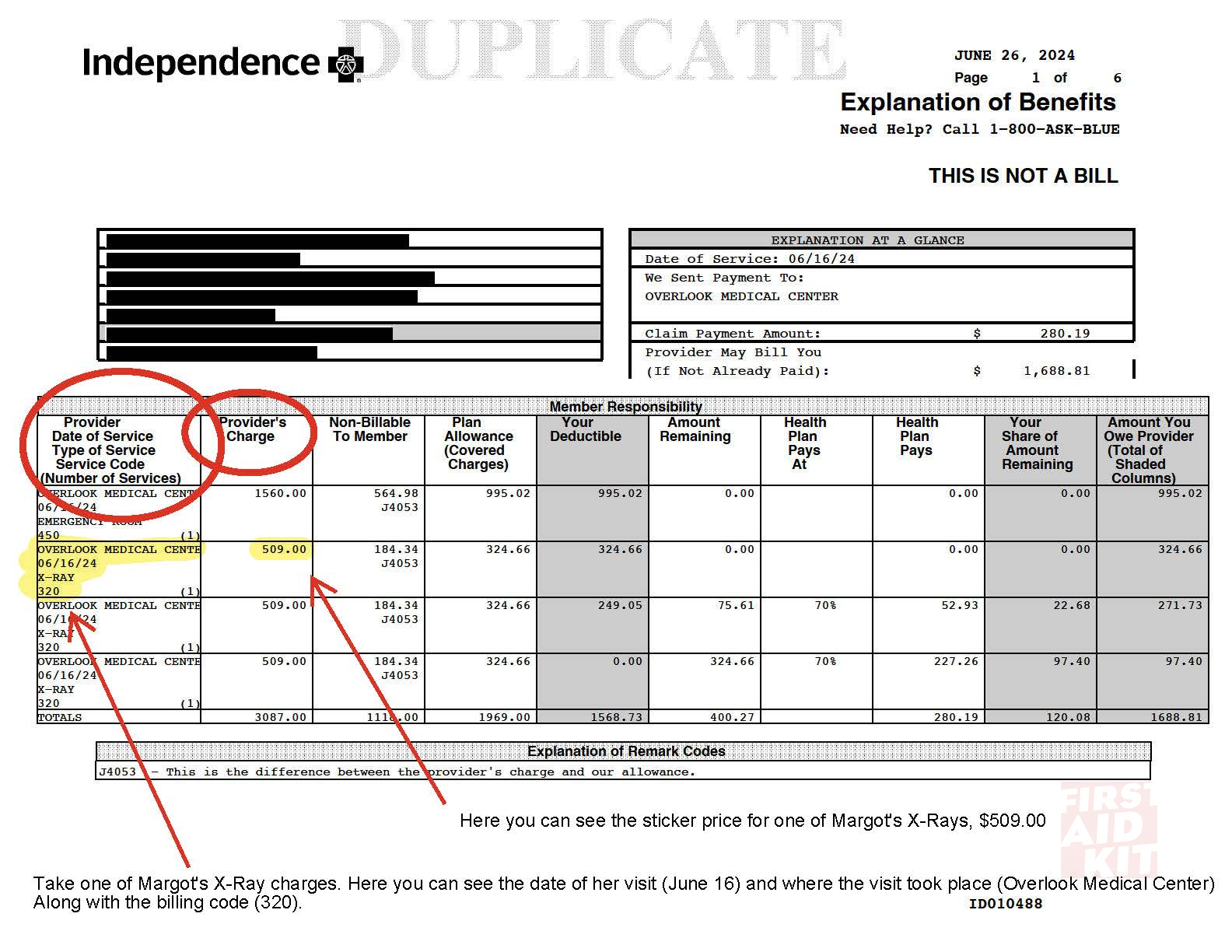
All the way on the left-side, you’ll see a column detailing the medical care provided, along with the date and billing code.
Next to that is a column with the sticker price, calculated by your hospital or doctor’s office, for that service or procedure (usually named something like “provider charges”).
Ultimately, this list should match what you’re seeing on the bills.
Go back and forth between your bills and EOBs and make sure the numbers line up.
Here’s where Margot found something big: a shocking $9,934.44 bill from the other ER she visited … just didn’t show up on her EOBs at all. That definitely would need investigating.
Making a plan of action
Now Margot had identified some issues to investigate:
Why hadn’t her insurance registered that mammoth ER bill? Why was she getting billed for an injection she was charged for that she was pretty sure she didn’t get?
We made a shared Google Doc where we listed the potential mistakes she’d identified (with the relevant bills linked), and we wrote next steps in red.
These looked like:
-
Check why I was charged three times for the X-ray.
-
What is a “supplies” fee? Find out.
-
Download the clinician notes6 from the visit on June 19 to see if I got an injection that I can’t remember.
For reference, Margot added the phone numbers for her providers’ billing departments and insurance to the bottom of the document, and then she started making some calls.
Oh, and Margot got some other big, iffy-looking charges that I haven’t mentioned yet — almost $1,100 in “facility fees.”
We dived into these fees on our show last year: what they are, why patients are seeing them more on their bills, and how we can maybe fight back, individually and collectively.
Next week, we’ll get into them here, with part 3 of our mini-series on billing fights.
Till then,
— Claire
1
Never Pay the First Bill is the title of a book by the late journalist Marshall Allen that’s full of excellent advice for dealing with big medical bills, and serves as a major inspiration for this newsletter.
2
We’ve covered how providers sometimes pad their bills by assigning them a higher “level of service” — basically a number from 1 to 5 that designates how complex a case is. The thinking here is that doctors and facilities should be able to bill higher for more difficult cases. Fair. Except hospitals have started assigning more level 4s and 5s for visits that applying the word “complex” to is a real stretch of the imagination.
3
General charges like this might be something called facility fees — we’ve covered them before on the show and in previous First Aid Kits. Facility fees are a bit more complicated to fight, so for now, we’re going to put these charges aside, and dive into them in an upcoming newsletter.
4
If you register, you can also search five codes a day for free on the American Medical Association’s website. And as Dan noted in our previous First Aid Kit, “Typing the words ‘CPT code,’ plus the code number and whatever’s written on the bill into a search engine should get you some usable results.”
6
Those clinician notes, by the way, are detailed summaries of your visit written by your doctor or nurse, which include your past medical history, lab results, and a description of the appointment. You can usually find them on your patient portal. These are great to have on-hand if you end up disputing a charge. We’ll dive deeper into how to read them in another issue of First Aid Kit.
Get the First Aid Kit Newsletter!
Summing up the practical lessons we've learned about surviving the health-care system, financially.
Reporting on why health care costs so freaking much, and what we can maybe do about it.
More about us →
First Aid Kit
Get our latest tips for dealing with the healthcare-industrial complex.
Have a health care question?
For topic-specific deep dives and recommended reading, start here or use the search bar below to explore our site.