First Aid Kit is a newsletter meant to help you fight a brutal enemy — the American health care system. Subscribe here.
Picking insurance (again)? We’ve got some updates
Still the same garbage system, but some glimmers of decent news.
December 8, 2022
Share
Hey there —
We kicked off First Aid Kit with a guide to picking insurance, which took us three longish newsletters to get through. Insurance is fiendishly complicated.
Now, we’ve got some updates — and they’re mostly good news, although the whole system is still a raging trash fire.
First, though: This is the time of year when we ask you to donate, to keep this service going.
We ask because First Aid Kit is a free service. We will never paywall this vital information. Folks who need it most may be least able to pay.
But it’s produced by professional journalists, who need to eat. So we need your help to make it work.
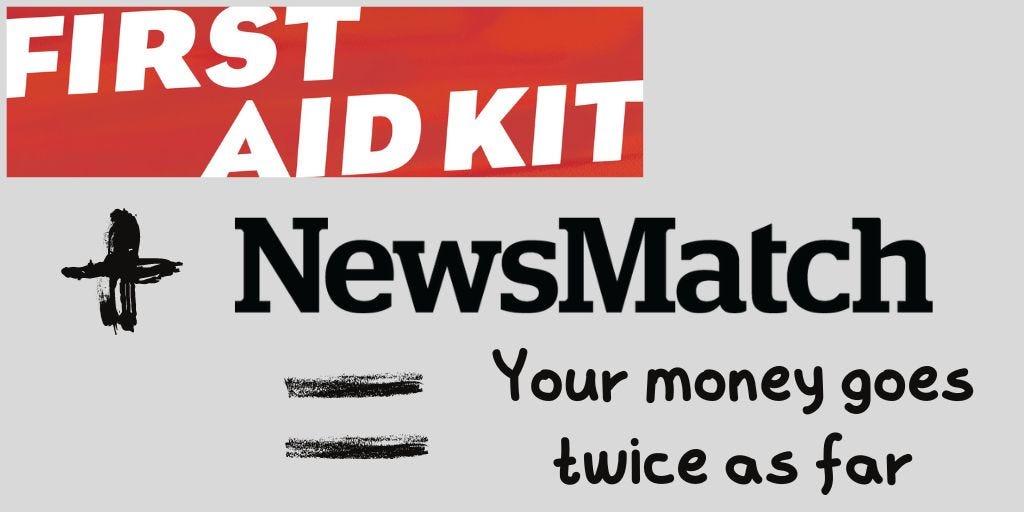
And through December, a program called NewsMatch doubles every donation, up to $1,000 per person.
In other words, we ask now because now is when you get the best deal, and we are all about good deals.
OK! Help keep this free service going strong through 2023.
Now, our five items about buying insurance. Let’s go.
1. Renewed warning: Don’t start your health-insurance hunt on Google.
Last year — both here in First Aid Kit and on the Arm and a Leg podcast — we warned you against random Googling when you start looking for health insurance. Basically, a search for “get Obamacare” or “ACA enroll” would get you links to scammers, who would often give you a hard-sell on junk insurance.
This year, we’ve gotta reiterate that warning: I just did some searches — for terms like “get obamacare” and “ACA enroll” — and the top results were all ads, many for sites that look sketch as heck.1
On the decent-news side: The Federal Trade Commission went after one of the scammers this year, and is making them pay back $100 million to people who got conned.
But remember: If you want legit health insurance, skip Google. Healthcare.gov takes you to the ACA marketplace, where insurance could be a lot cheaper than you’d expect. (See #2 below.)
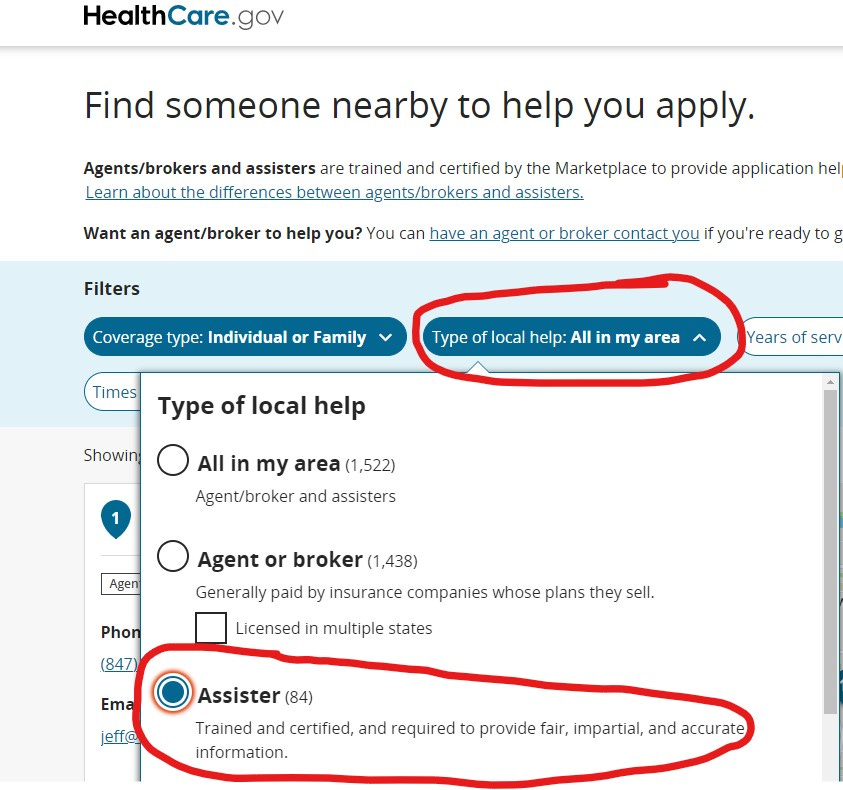
And if you could use help navigating, you can get it from federally-funded “assisters.” There are more of them this year, thanks to new federal dollars, and you can find them via the healthcare.gov site. Click on “Find Local Help” and choose “Assister” under “Type Of Help.”
2. Obamacare subsidies are back, whew!
One piece of good news we reported last year (in the same First Aid Kit about scam insurance) was that new subsidies made Obamacare marketplace plans much more affordable for a lot of people.
But those subsidies had an expiration date, which would have made everything more expensive for folks this year.
The update: Last summer, Congress extended those subsidies through 2025.2
So once again, millions of people qualify for plans that cost $100 or less per month and come with super-low out-of-pocket expenses. Actual, affordable insurance for folks without a ton of cash.
These subsidies also made insurance more affordable for folks with middle-class incomes. Not $100-per-month, but often hundreds of dollars cheaper. Worth. Checking. Out.
3. ICYMI: A video supplement to last year’s insurance-buying guide.
If you heard the most recent Arm and a Leg episode, you’ve already heard about “a terrible guide to the terrible terminology of U.S. health insurance” by the quirky YouTube maestro Brian David Gilbert.
If not, let me introduce you!
Gilbert has grown a large online following for his funny, odd, and often sneakily thoughtful work.
And this video is comprehensive — which means it’s full of horrifying details and thirty minutes long. It’s also funny, sweet, entertaining, and potentially useful.
For anyone who has found their eyes glazing over with all the terms involved — deductible, multi-tiered network, formulary, PPO, HMO, EOS, HDHP, etc. — this may be the best guide you’ll ever see.
If you or someone you know is buying insurance for the first time — or is intent on making fewer mistakes this time — pair Gilbert’s video with our newsletter series about buying health insurance, which starts here.
4. The Family Glitch is getting partly fixed. And other issues got a little better.
Last year, we wrote about a couple of related problems that prevented some folks from getting access to those Obamacare subsidies.
One was that if your employer offers “affordable” insurance, you don’t qualify. And anything up to almost 10 percent of your income is counted as “affordable.” That’s a big bite. 3
The second problem — the glitch — was that if you had family members who also needed insurance, there was effectively no ceiling on what you might have to pay to cover them.
No matter how much your employer charged you in order to cover the rest of your family, those family members couldn’t get a subsidized plan on the Obamacare marketplace.4
The “family glitch” has been around since Obamacare became available, and it hit more than 5 million people last year.
This year, the Biden administration changed some IRS rules in an effort to fix the glitch.
Except, the fix leaves out a lot of people. The administration projects only about one million people will benefit, which is a lot less than the five million who’ve been caught in the glitch.
Finding out whether your family stands to benefit involves some weird and complicated rules. (We’re talking about the IRS here.) These two guides — one from our pals at KFF, and one from healthinsurance.org — will get you started on navigating them.
5. How does the end of Roe v. Wade affect insurance coverage for abortion?
For a lot of people, the Dobbs v. Jackson Women’s Heath decision in June didn’t change much. State and federal rules meant lots of people already couldn’t get insurance covering abortion.
And for a lot of other people, insurance hasn’t helped them easily access abortion, even if their plan technically covered it.
Some of those folks have super-high deductibles. Others have privacy concerns — like they share an insurance plan with someone with whom they don’t want to discuss their abortion decision.
So for decades, grassroots abortion funds have been organizing to help people get access. These funds pay medical bills and help with safe transportation and other logistics for patients. They’re definitely not going anywhere.
But: There are folks for whom the end of Roe will mean insurance for abortion gets… funky: These are people who live in states where abortion is now illegal, but who get their insurance from big, national employers.
Basically, these employers already have provisions in their health plans to help people travel when care out-of-state is better — like for one-of-a-kind surgical specialists. They’d be treating abortion care the same way.
But those companies’ lawyers are telling them: Watch out. Your company might end up getting sued — or even prosecuted. Nobody knows how any of those cases will shake out.
We spent a whole podcast episode on this question recently, so you can hear all about both abortion funds and insurance weirdness there, or read the transcript.
That’s it for this First Aid Kit — I hope it’s been useful to you. We’ll be back in a few weeks, picking up our series about what to do when you get a weird/scary medical bill.
Meanwhile, don’t forget: This is the best time to support us with a donation. Every dollar you give us gets matched!
Here, go for it.
Thank you! And: Take care of yourself.
Dan
1
For example, some come out and say (in the fine print) that they sell “short Term Plans” and “fixed indemnity plans” — aka junk insurance. Others say in the fine print — though not in so many words — that if you give them your contact info, you can expect a ton of spam calls from people selling junk.
2
That’s thanks to the Inflation Reduction Act, the ginormous bill that Congress passed last summer, which also lowered drug costs for people on Medicare and included incentives for clean energy.
3
Actually 9.61 percent. This year, the bite is a little smaller: 9.12 percent.
4
So, say you made $55,000 a year. Insurance-for-you meant paying $5,000. That’s “affordable,” and you couldn’t get a subsidized Obamacare plan. If insurance-for-the-family meant paying $20,000? Yup, too bad. No subsidized Obamacare plan for them.
Get the First Aid Kit Newsletter!
Summing up the practical lessons we've learned about surviving the health-care system, financially.
Reporting on why health care costs so freaking much, and what we can maybe do about it.
More about us →
First Aid Kit
Get our latest tips for dealing with the healthcare-industrial complex.
Have a health care question?
For topic-specific deep dives and recommended reading, start here or use the search bar below to explore our site.